


How Georgia celebrates New Year — a holiday that lasts three weeks
Is this your first holiday season in Tbilisi, and you can't work out why nobody rushes back to work on 2 January — and why, a week later, the streets are full of singing again? Or have you lived here for years and still never figured out what that curly white branch is doing in your neighbours' living room instead of a fir tree? New Year in Georgia isn't a single night — it's a whole chain of days, each with its own ritual and its own meaning. Georgian New Year traditions are better lived than read about: the taste of gozinaki, polyphonic singing at the table and the procession along Rustaveli Avenue stay with you for a long time — unlike yet another box under the tree. Below are the main Georgian traditions of the season: what each one means, when to see it and how to experience it yourself, even if you're not waiting for an invitation to a Georgian home.
Chichilaki, the Georgian Christmas tree that burns away the year's troubles
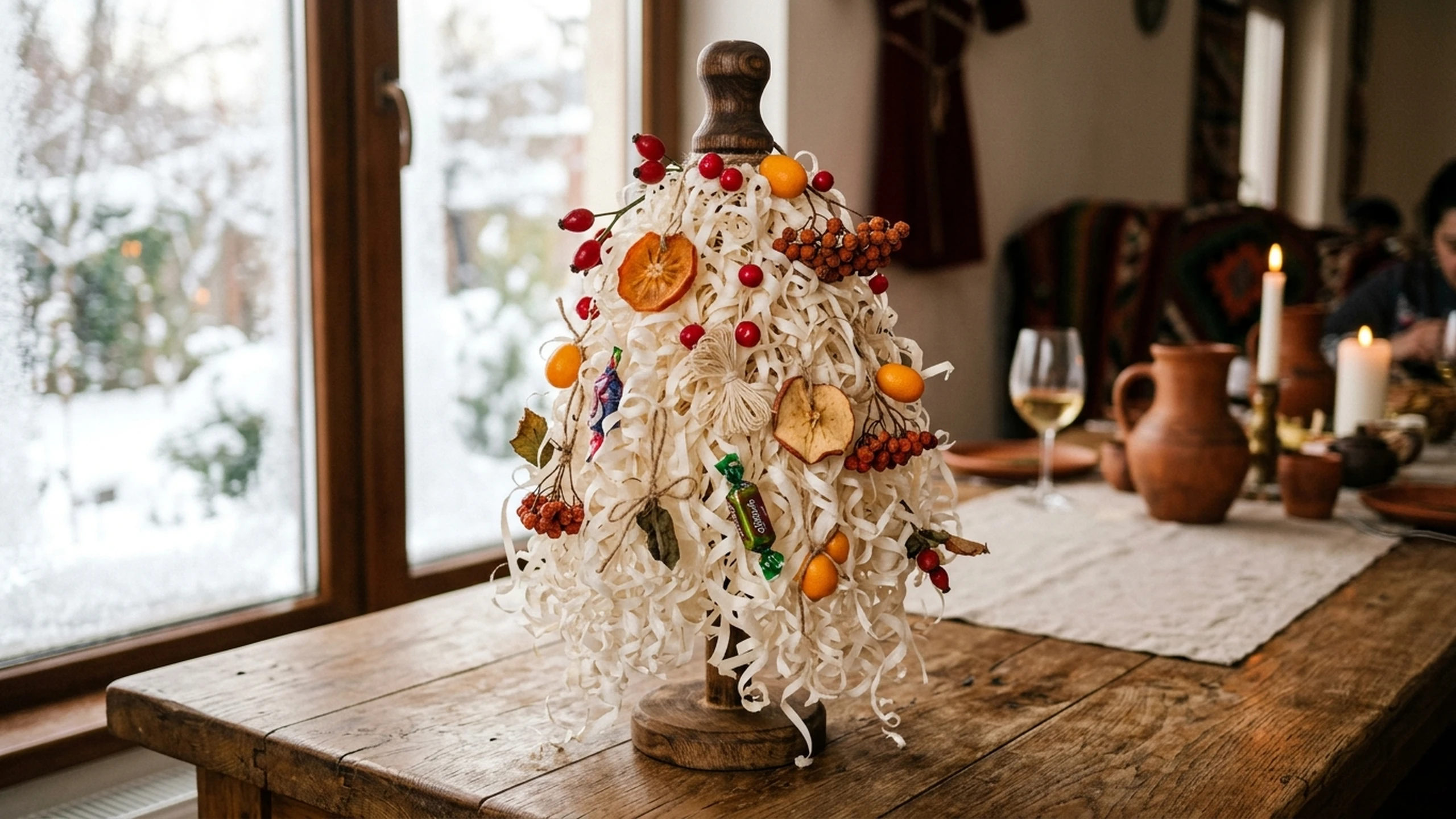
A chichilaki is a New Year tree made from a hazel branch: it's shaved so that the thin curls of wood don't fall off but stay hanging in soft ringlets. A home chichilaki usually stands just 50–70 centimetres tall, yet in a room it looks like a small white cloud. It's as if someone had gently combed the tree and left it out to dry — and all its charm lies in that simplicity. This Georgian Christmas tree doesn't shed needles, doesn't need a bucket of water, and tells a whole story:
- What it's made of. The base is a hazel branch and its own shavings, decorated with berries, sweets and dried fruit. Instead of glass baubles, things you can eat — and that's Georgian character in a nutshell: even the tree is generous.
- What it symbolises. The curls are said to resemble the beard of St Basil the Great, whose feast day falls on 1 January. The tradition has its roots in western Georgia, in Guria. So it's a tree with a backstory, and you'll always have something to tell your guests about it.
- How it ends. After the holidays, traditionally on Epiphany, 19 January, the chichilaki is burned so that the troubles of the past year go up in smoke with it. You have to admit, that's far more moving than dragging a dried-out pine to the bins.
Mekvle, bedoba and a sweet table: how Georgia welcomes the new year
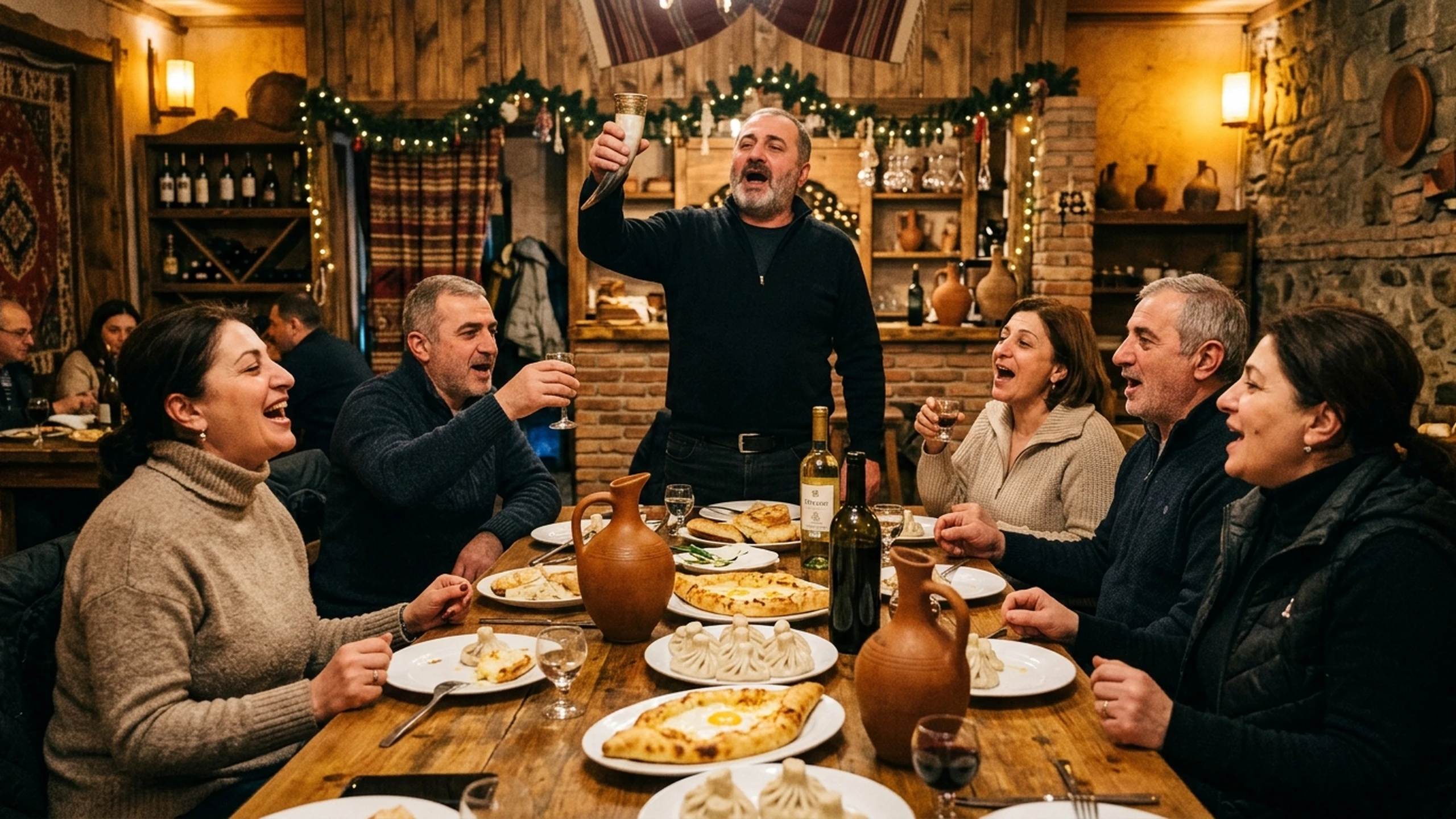
If the chichilaki is the symbol of the holiday, its soul is the people and the table. At New Year, Georgia lives by omens, guests and songs, and every tradition has its own logic:
- Mekvle. This is the name for the first person to cross the threshold of a home in the new year: it's believed that the whole year depends on them. That's why the mekvle is chosen in advance — someone who's lucky. If you're invited to be a mekvle, don't say no: come with sweets, fruit and warm wishes — it's an honour, not a formality. That's exactly why the mekvle's visit is awaited with excitement and greeted like the most cherished guest.
- Tovlis Babua. Georgia's own Grandfather Frost "hails" from Ushguli in Svaneti. He carries his gifts in a khurjini saddlebag, and inside you'll find churchkhela and gozinaki. For children he's just as eagerly awaited as Father Christmas — only with Georgian flair and sweets instead of plastic toys.
- The New Year table. The star of the Georgian New Year table is satsivi, alongside roast suckling pig and khachapuri. Gozinaki — walnuts fried in honey — are a must, "so the year will be sweet." People sit at a table like this for a long time, unhurried, and every toast turns into a little story.
- Mravaljamieri. A table song and hymn to long life, sung in polyphony. When the whole table joins in, it gives you goosebumps even if you don't know a single word of Georgian.
- Bedoba. 2 January is the "day of fate": the way you spend it is the way the whole year will go. The logic is simple — if you want a happy year, spend bedoba with your loved ones and in a good mood. A perfect excuse to recharge after New Year's Eve.
Alilo and other dates: when is New Year in Georgia (and why there's more than one)
The Georgian Church celebrates Christmas on 7 January — according to the Julian calendar, which runs 13 days behind. On this day Tbilisi hosts Alilo, a Christmas procession with a tradition going back some 15 centuries. Participants traditionally gather on First Republic Square and walk along Rustaveli Avenue and through Avlabari to Sameba Cathedral. Some are dressed as angels — makharobeli, the messengers of joy — others as the Magi and shepherds, and everyone sings Christmas chants. The procession collects donations — sweets, food, money — which are then shared out among people in need, orphans and care homes. The start time changes from year to year, so check the announcement closer to the date. Even if you just stand at the edge of the pavement on Rustaveli, the chanting, the costumes and the joyful crowd are so infectious that you feel the holiday in your bones.
So when is New Year in Georgia? The answer: almost three weeks in a row. Here's what the Georgian New Year holidays look like, day by day:
| Date | What happens | Public holiday? |
|---|---|---|
| 31 December — 1 January | New Year: the mekvle, midnight fireworks, the main Christmas tree on Freedom Square in Tbilisi | Yes, 1 January |
| 2 January | Bedoba — the day of fate | Yes |
| 7 January | Christmas, the Alilo procession | Yes |
| 13–14 January | Old New Year; Kalanda in Guria | No |
| 19 January | Epiphany, burning the chichilaki | Yes |
Note: Old New Year isn't a day off, but on 19 January the whole country rests — a great moment to see how people bid farewell to the chichilaki and close the holiday season in style.
How to experience Georgian New Year yourself: 6 experiences in Tbilisi
You don't need to wait for an invitation to a Georgian home to feel the holiday from the inside. Here's what to do in Tbilisi at New Year so that Georgia's traditions turn from a story into an experience of your own:
- Georgian supra and cooking masterclass — the most direct route to the spirit of Mravaljamieri. Over 3 hours you cook traditional dishes, taste wine and chacha, then sit down at the table with a tamada, Georgian songs and a lesson in national dances. Groups of up to 6, 18+ — the ideal choice for anyone spending their first New Year in Georgia.
- Khinkali and khachapuri making workshop — khachapuri is a must on the New Year table, so why not bake it yourself? Three hours, from two people, Imeretian khachapuri, khinkali and homemade wine. Children aged 7 and up can join, which makes it a can't-go-wrong choice for a family bedoba.
- Gastronomic journey through Georgia for two — the whole festive table in a tasting format: 6 appetisers, 7 kinds of gastro-khachapuri and two glasses of Georgian wine in an hour and a half. For a couple aged 18+ who want romance without hours in the kitchen: it's like flicking through the whole of Georgian cuisine in a single evening.
- Cheese tasting — an hour for two, cheeses paired with Georgian wines and stories about their origins and traditions. A thoughtful gift for a foodie who's already tried everything on the New Year table — from age 12. A calm format for a quiet reset between noisy feasts.
- Illuminated Christmas tree panel — a tree made of yarn with beads and snowflakes that you make with your own hands in an hour or an hour and a half and take home. Just like the chichilaki, its value lies in being handmade, not bought. Suitable for children from age 4, up to 4 participants.
- Georgian language lessons for foreigners — 8 sessions of an hour and a half, online or offline: conversation practice, the alphabet and stories about traditions, music and food. A gift for someone who wants to understand the toasts, not just clink glasses on cue. Start in December — and by Alilo you'll already be catching familiar words in the chants.
And if you want to do more than just listen to the songs and actually dance, take a look at the Dancing section — it includes Georgian dance lessons, some of them in national costume.
Can't pick just one? Put together a Georgian New Year in a single gift certificate: say, a supra, a cheese tasting and a Christmas tree panel. A multi-gift holds up to 5 experiences, the recipient decides what suits them best, and you only pay for the most expensive one. That's freedom of choice — the best gift of the holiday season. Especially when you don't know what the person would enjoy more: singing at the table, baking khachapuri or crafting a tree with the kids.
The no-go list — what not to give
Georgian New Year is generous, but it has its "don'ts" too. Here's what you'd better not bring when visiting during these days, so your gift delights your hosts rather than embarrasses them:
- Anything bitter on 1–2 January. According to tradition, if you bring something bitter into the house — pepper, for example — the year will be bitter too. Save the hot sauces for later.
- Empty hands if you're the mekvle. The first guest arrives with sweets and fruit — without them, the ritual loses its meaning.
- Cash in an envelope. In a celebration built on warmth and personal involvement, it comes across as indifference.
- Random perfume and cosmetics. Too personal a gift if you don't know the person's taste.
- Magnets and "Georgia" souvenirs. A mug gathers dust on the shelf, but an evening with a tamada and Mravaljamieri stays with you for a long time.
Let Georgian traditions become yours too
If you want this New Year to be remembered not for boxes under the tree but for real emotions, take a look at Yolo — it brings together all kinds of activities across Georgia. You can choose a New Year gift certificate for a specific experience or go for a multi-gift — the recipient picks the perfect option from the selection, and the e-certificate arrives by email or messenger in a minute. Things are forgotten by spring, but the taste of khachapuri you baked yourself and the voice of the tamada stay with us for a long time.


