 Menu
Menu


-
Experiences
-
Experiences
-
Posters
Menu
-
Categories
-
Places
Menu
- Galleries LICHT Gallery ExpoGeorgia IArt Gallery Dimitri Shevardnadze National Gallery Tbilisi Digital Space
- City sites Mtatsminda Park Mziuri Park Vake Park April 9 (Alexander) garden Shota Rustaveli Avenue
- Children's studios Creative center Art BOOM Tamashobana Happy Kids Art Club Ferdinand farm GinGer
- Ecclesiastical institutions Tbilisi Yoga Loft TBILISI YOGA VILLA Transcendental Meditation Georgia Lumos Yoga Cave
- Event spaces KERA Space Gardenia Shevardnadze Orbeliani Bazaar Fabrika bibliotheque_tbilisi
- Cafe-restaurants Blue Fox Restaurant Tsiskvili Utskho 8000 Vintages Wasserstrasse
- Cinemas Amirani Cinema Cavea City Mall Saburtalo Cavea Grand Mall Cavea Tbilisi Mall Cavea East Point Cavea Galleria
- Concert halls Kakhidze Music Center Monohall MONUMENT Tbilisi Concert Hall Tbilisi Sports Palace
- Lecture halls Terminal Auditoria Colab TBC Concept PRANA
- Museums Georgian Museum of Fine Arts Georgian National Museum Experimentorium Holoseum Zurab Tsereteli Museum of Modern Art
- Nightclubs/bars Love Bar Underwheel club Dedaena Bar KHIDI MTKVARZE
- Educational institutions Institut Français de Géorgie Beka's School BTU The Thinking Academy Japanese Language & Culture Center
- Public organizations Georgian Historic Vehicles Association Georgian-Ukrainian platform (Ukrainian House) The Samaritan Association of Georgia Blood Bank
- Hotels Tbilisi Hills & Residence Pullman Tbilisi Axis Towers Stamba Hotel Sheraton Grand Tbilisi Metechi Palace Holiday Inn Tbilisi
- Sports grounds Dinamo Arena Mikheil Meskhi Stadium Hippodrome Lisi Lake Lilo Arena Paichadze Stadium
- Theaters Nodar Dumbadze Theater (ნოდარ დუმბაძის თეატრი) Tbilisi Circus Royal District Theatre Griboedov Theatre Gabriadze Theatre
-
Categories
-
Posters
-
Categories
-
Places
Menu
- Galleries LICHT Gallery ExpoGeorgia IArt Gallery Dimitri Shevardnadze National Gallery Tbilisi Digital Space
- City sites Mtatsminda Park Mziuri Park Vake Park April 9 (Alexander) garden Shota Rustaveli Avenue
- Children's studios Creative center Art BOOM Tamashobana Happy Kids Art Club Ferdinand farm GinGer
- Ecclesiastical institutions Tbilisi Yoga Loft TBILISI YOGA VILLA Transcendental Meditation Georgia Lumos Yoga Cave
- Event spaces KERA Space Gardenia Shevardnadze Orbeliani Bazaar Fabrika bibliotheque_tbilisi
- Cafe-restaurants Blue Fox Restaurant Tsiskvili Utskho 8000 Vintages Wasserstrasse
- Cinemas Amirani Cinema Cavea City Mall Saburtalo Cavea Grand Mall Cavea Tbilisi Mall Cavea East Point Cavea Galleria
- Concert halls Kakhidze Music Center Monohall MONUMENT Tbilisi Concert Hall Tbilisi Sports Palace
- Lecture halls Terminal Auditoria Colab TBC Concept PRANA
- Museums Georgian Museum of Fine Arts Georgian National Museum Experimentorium Holoseum Zurab Tsereteli Museum of Modern Art
- Nightclubs/bars Love Bar Underwheel club Dedaena Bar KHIDI MTKVARZE
- Educational institutions Institut Français de Géorgie Beka's School BTU The Thinking Academy Japanese Language & Culture Center
- Public organizations Georgian Historic Vehicles Association Georgian-Ukrainian platform (Ukrainian House) The Samaritan Association of Georgia Blood Bank
- Hotels Tbilisi Hills & Residence Pullman Tbilisi Axis Towers Stamba Hotel Sheraton Grand Tbilisi Metechi Palace Holiday Inn Tbilisi
- Sports grounds Dinamo Arena Mikheil Meskhi Stadium Hippodrome Lisi Lake Lilo Arena Paichadze Stadium
- Theaters Nodar Dumbadze Theater (ნოდარ დუმბაძის თეატრი) Tbilisi Circus Royal District Theatre Griboedov Theatre Gabriadze Theatre
Posters
-
Categories
Event already passed

Ceramic Painting Workshop at the Gabriadze Theatre
Ceramic Painting Workshop at the Gabriadze Theatre
13, Ioane Shavtelis St., Tbilisi
Ticket price
from150 ₾
Description
Join us for a ceramic painting workshop in one of the city's most poetic and distinctive artistic spaces — the legendary Gabriadze Theatre.
Surrounded by a magical atmosphere filled with artistic details and stories told through puppetry, participants will create their own ceramic artwork inspired by the visual world of Rezo Gabriadze under the guidance of a professional ceramic artist.
This is a unique cultural experience that blends the intimacy of an artist’s studio with the spirit of a theatrical space, offering direct access to the aesthetics of Gabriadze’s art, the warmth hidden within his intentionally imperfect sketches, and the poetic sense of play that defines his work.
Workshop Format
• Small groups — up to 10 participants
• Minimum group size — 4 participants
• Duration: 1.5–2 hours
• Ideal for solo travelers, couples, families, and private groups
What Guests Will Experience
• A brief introduction to the creative universe of Rezo Gabriadze
• Professional ceramic paints and materials
• Individual guidance from a ceramic artist throughout the workshop
• Creation of an original ceramic piece — a cup, tile, or figurine inspired by the theatre’s visual mythology
Each piece will be kiln-fired and ready for collection within 3 days. Guests may either pick up their work in person or arrange delivery. All items are provided in special branded packaging.
You will take home a handcrafted souvenir created by your own hands.
Why Guests Remember This Experience
• A rare opportunity to immerse yourself in the atmosphere of Gabriadze’s artistic world
• A cultural experience that goes beyond traditional sightseeing
• A hands-on creative process that becomes part of the journey itself
• A unique handmade keepsake carrying the spirit of Old Tbilisi
Every guest leaves with their own painted ceramic artwork. Yet many leave with something even more memorable — the feeling that, for a few hours, they became part of one of Rezo Gabriadze’s magical stories.
Photos and videos
Location
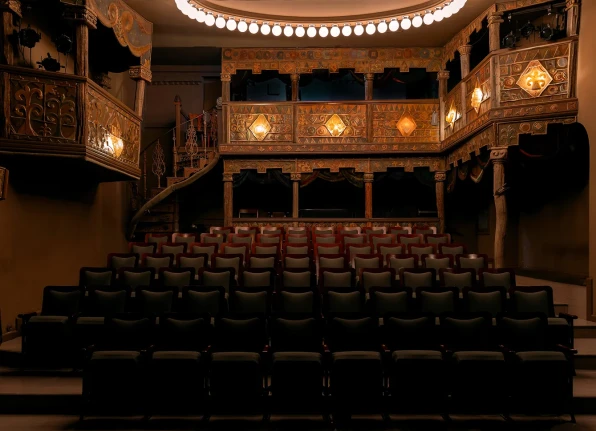
Gabriadze Theatre stands in the heart of Tbilisi's historical Old Town, located at 13 Shavteli Street. It was founded by Rezo Gabriadze in 1981. With a seating capacity of just 80, Theatre is among the world's preeminent cultural institutions.
Director, playwright, artist, and sculptor Rezo Gabriadze crafted his plays, created marionettes, and brought them to life on his stage. His theatre is a unique, author-driven space where medieval marionette art is infused with new significance and seamlessly integrated into Georgian culture. For many years, Gabriadze has promoted Georgian culture internationally through his performances.
In its 40-year history, the Gabriadze Theatre has toured numerous countries and participated in international festivals in Avignon, Edinburgh, New York, Toronto, Belgrade, Charleston, Dresden, Moscow, and other cities. The universality of Gabriadze's artistic language resonates with audiences worldwide, making his characters' emotions universally understandable.
Leo Gabriadze artistic director and producer of the Gabriadze Theatre, is the principal guardian of the delicate poetic world created by his father. Since Rezo’s passing in 2021, Leo has continued his father's work.
Gabriadze Theatre currently features four performances: "The Autumn of My Springtime", "Ramona", "Alfred and Violetta", "Marshal de Fantie's Diamond".
This distinctive atmosphere extends beyond the stage. The theatre's facade itself, features golden letters with Rezo Gabriadze’s motto: “Extra Cepam Nihil Cogito Nos Lacrimare,” meaning “Let tears flow only from chopping onions.” This motto has become a symbol of the theatre and Gabriadze’s universe.
Since 2010, the theatre’s clock tower has become a main attraction, featuring intricate designs based on Gabriadze’s sketches. Every hour, an angel emerges from painted doors to ring a bell. Inside the tower is a small puppet theatre presenting the “Circle of Life" performance twice a day. The tower also features ceramic panels created by Gabriadze. In 2019, Atlas Obscura listed the Gabriadze Theatre's clock tower among the 17 iconic monumental clocks worldwide.
“Rezo Gabriadze is the angel of Tbilisi. We should bow to the audience and respect the puppets, who dislike being treated disparagingly’, he says. And who would disagree with that? Not those who refuse to leave after the performance has ended, who gather in front of the stage to look at Boria and his friends, as if unable to believe that these small creatures will stay there through the night, attached to their strings, in the empty room which is just about to close.”
Le Monde
Sign up for the newsletter