 Menu
Menu


-
Experiences
-
Experiences
-
Posters
Menu
-
Categories
-
Places
Menu
- Galleries LICHT Gallery ExpoGeorgia IArt Gallery Dimitri Shevardnadze National Gallery Tbilisi Digital Space
- City sites Mtatsminda Park Mziuri Park Vake Park April 9 (Alexander) garden Shota Rustaveli Avenue
- Children's studios Creative center Art BOOM Tamashobana Happy Kids Art Club Ferdinand farm GinGer
- Ecclesiastical institutions Tbilisi Yoga Loft TBILISI YOGA VILLA Transcendental Meditation Georgia Lumos Yoga Cave
- Event spaces KERA Space Gardenia Shevardnadze Orbeliani Bazaar Fabrika bibliotheque_tbilisi
- Cafe-restaurants Blue Fox Restaurant Tsiskvili Utskho 8000 Vintages Wasserstrasse
- Cinemas Amirani Cinema Cavea City Mall Saburtalo Cavea Grand Mall Cavea Tbilisi Mall Cavea East Point Cavea Galleria
- Concert halls Kakhidze Music Center Monohall MONUMENT Tbilisi Concert Hall Tbilisi Sports Palace
- Lecture halls Terminal Auditoria Colab TBC Concept PRANA
- Museums Georgian Museum of Fine Arts Georgian National Museum Experimentorium Holoseum Zurab Tsereteli Museum of Modern Art
- Nightclubs/bars Love Bar Underwheel club Dedaena Bar KHIDI MTKVARZE
- Educational institutions Institut Français de Géorgie Beka's School BTU The Thinking Academy Japanese Language & Culture Center
- Public organizations Georgian Historic Vehicles Association Georgian-Ukrainian platform (Ukrainian House) The Samaritan Association of Georgia Blood Bank
- Hotels Tbilisi Hills & Residence Pullman Tbilisi Axis Towers Stamba Hotel Sheraton Grand Tbilisi Metechi Palace Holiday Inn Tbilisi
- Sports grounds Dinamo Arena Mikheil Meskhi Stadium Hippodrome Lisi Lake Lilo Arena Paichadze Stadium
- Theaters Nodar Dumbadze Theater (ნოდარ დუმბაძის თეატრი) Tbilisi Circus Royal District Theatre Griboedov Theatre Gabriadze Theatre
-
Categories
-
Posters
-
Categories
-
Places
Menu
- Galleries LICHT Gallery ExpoGeorgia IArt Gallery Dimitri Shevardnadze National Gallery Tbilisi Digital Space
- City sites Mtatsminda Park Mziuri Park Vake Park April 9 (Alexander) garden Shota Rustaveli Avenue
- Children's studios Creative center Art BOOM Tamashobana Happy Kids Art Club Ferdinand farm GinGer
- Ecclesiastical institutions Tbilisi Yoga Loft TBILISI YOGA VILLA Transcendental Meditation Georgia Lumos Yoga Cave
- Event spaces KERA Space Gardenia Shevardnadze Orbeliani Bazaar Fabrika bibliotheque_tbilisi
- Cafe-restaurants Blue Fox Restaurant Tsiskvili Utskho 8000 Vintages Wasserstrasse
- Cinemas Amirani Cinema Cavea City Mall Saburtalo Cavea Grand Mall Cavea Tbilisi Mall Cavea East Point Cavea Galleria
- Concert halls Kakhidze Music Center Monohall MONUMENT Tbilisi Concert Hall Tbilisi Sports Palace
- Lecture halls Terminal Auditoria Colab TBC Concept PRANA
- Museums Georgian Museum of Fine Arts Georgian National Museum Experimentorium Holoseum Zurab Tsereteli Museum of Modern Art
- Nightclubs/bars Love Bar Underwheel club Dedaena Bar KHIDI MTKVARZE
- Educational institutions Institut Français de Géorgie Beka's School BTU The Thinking Academy Japanese Language & Culture Center
- Public organizations Georgian Historic Vehicles Association Georgian-Ukrainian platform (Ukrainian House) The Samaritan Association of Georgia Blood Bank
- Hotels Tbilisi Hills & Residence Pullman Tbilisi Axis Towers Stamba Hotel Sheraton Grand Tbilisi Metechi Palace Holiday Inn Tbilisi
- Sports grounds Dinamo Arena Mikheil Meskhi Stadium Hippodrome Lisi Lake Lilo Arena Paichadze Stadium
- Theaters Nodar Dumbadze Theater (ნოდარ დუმბაძის თეატრი) Tbilisi Circus Royal District Theatre Griboedov Theatre Gabriadze Theatre
Posters
-
Categories
Coming soon to screens
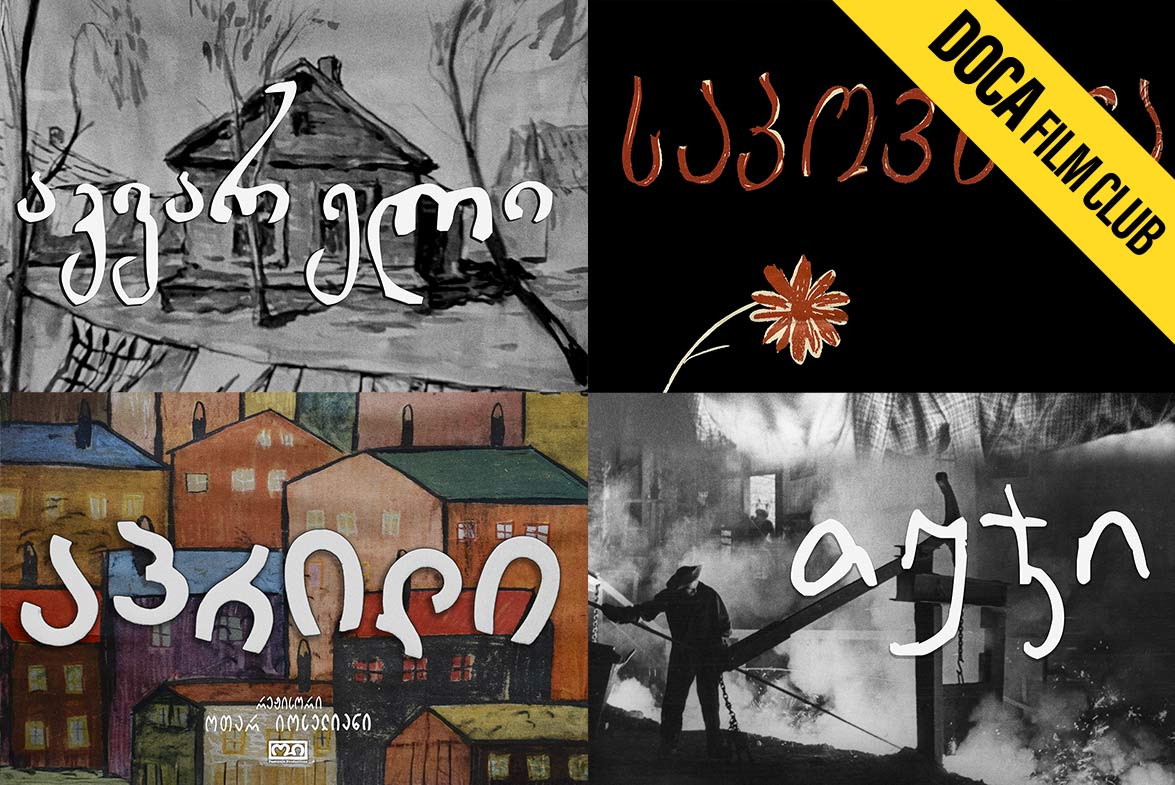
Description
Director: Otar Ioseliani
Screening language: Geo
“Aquarelle” — During an argument, a poor married couple случайно notices a painting depicting their home, which changes their perception of it. In the end, the family poses for the artist.
“This was my first student work, based on a story by Alexander Grin. The plot is simple: a poor family — the husband is an alcoholic, the wife a laundress. He spends the last money she earns on drinking. Then they suddenly see a watercolor painting of their dilapidated house. In the painting, the house appears cozy and welcoming, not bleak as they had imagined it. And they are overcome with sadness,” recalled Otar Iosseliani.
“The Find” — in 1959, director Otar Iosseliani made a film about Mikheil Mamulashvili titled “The Find.”
After the premiere, journalists surrounded the gardener, bombarding him with questions:
“What can you tell us about the great achievements of Soviet agriculture? Why do you never express your opinion on the accomplishments of Soviet science? Tell us what you think about leading agronomists and workers… Say something, tell us…”
The gardener lowered his head and modestly replied:
“I serve my homeland in my garden…”
In the autumn issue of that same year, the magazine “Woman of Georgia” published a remarkable article by Guguli Gobronidze about the life of the Mtskheta gardener, titled:
“I serve my homeland in my garden…”
I admire every one of his thoughts and all of his work.
“April” is a story about how everyday life and possessiveness suffocate a marriage, wither the tree of love, and shut off the flow of tenderness.
“Cast Iron” is a distinctive work in the filmography of Otar Iosseliani.
Filmed at the Rustavi Metallurgical Plant, this documentary is far more than a typical Soviet propaganda film. At the time, such works were meant to glorify heroic labor.
Instead, Iosseliani transforms industrial chaos into poetry. He presents the metallurgical plant as a forge of human character, where, in the struggle with fire, a silent unity among people is born.

Cinemas in Batumi and Tbilisi


Sign up for the newsletter